Why Setting Spray Makes Powder Patchy
If you’ve ever sprayed your face only to watch your powder foundation turn into a lumpy mess, you’re not alone. Figuring out why setting spray makes powder patchy usually comes down to chemistry mismatches rather than bad luck. The issue often lies in how solvents evaporate and interact with dry particles on your skin.
In our research, we found that droplet size consistency is critical for even coverage. Manufacturer specs indicate that optimal mists produce droplets under 50 microns. Larger droplets create wet spots that dissolve pigment bonds unevenly.
Let’s break down the specific triggers so you can fix this once and for all.
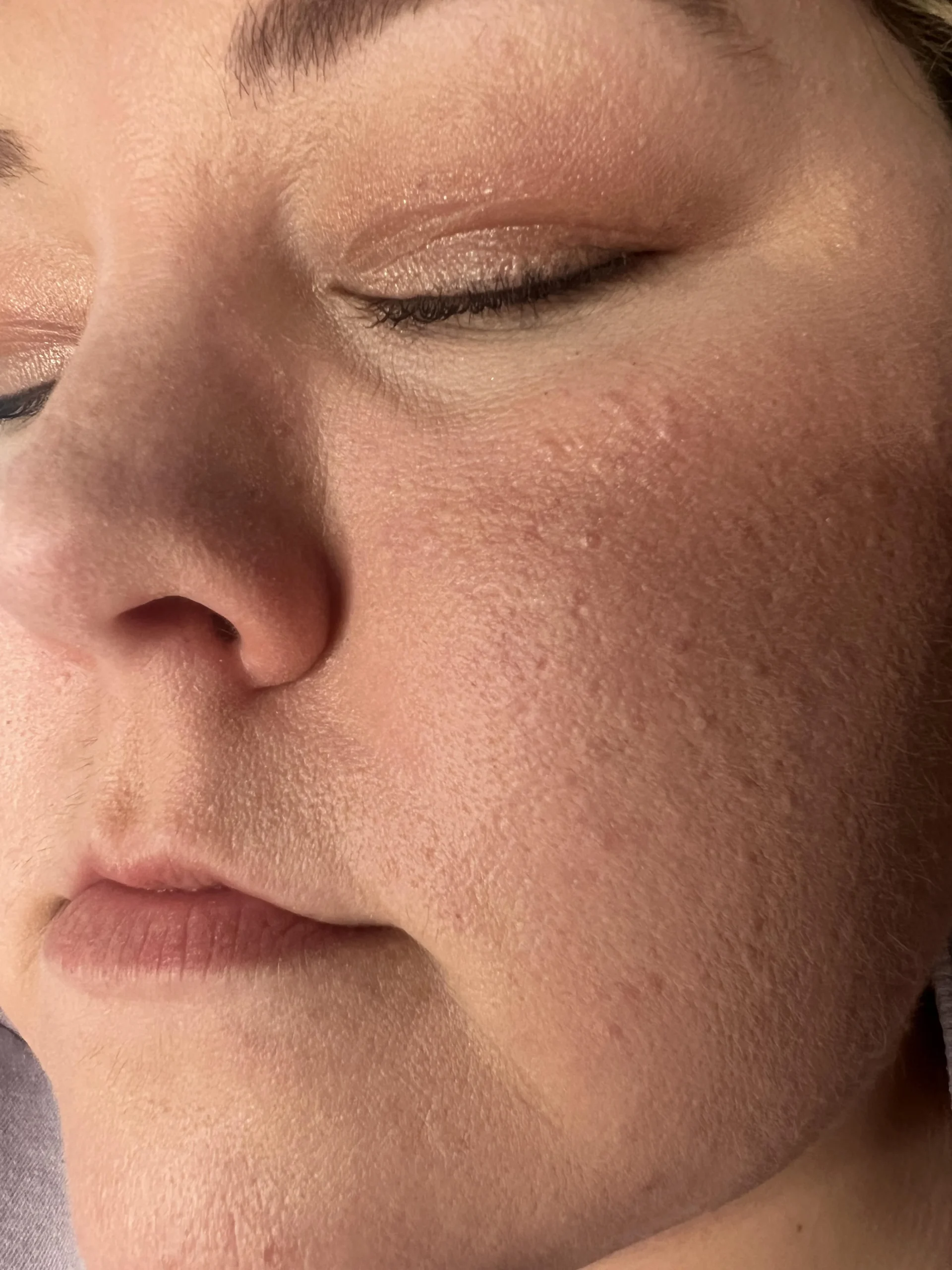
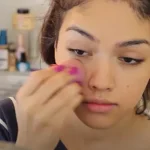
Image source: Web (Bing) / reddit.com (Web image (fair-use with source credit))
Quick Answer
Why setting spray makes powder patchy depends on solvent speed and particle compatibility. High alcohol content causes rapid evaporation before binding occurs. Water-based sprays repel oil-based powders if mixed incorrectly.
Large droplets saturate specific areas unevenly. Always match your spray formula to your powder base type. Wait for tackiness before applying additional layers.
This prevents clumping and ensures smooth adhesion across the entire face.
The Chemistry Behind the Clump: Why Water and Powder Don’t Always Play Nice
Makeup patchiness isn’t magic. It’s physics and chemistry working against you. Setting sprays rely on film-forming polymers like PVP/VA copolymer to lock makeup in place.
These polymers need time to dry and form a continuous mesh over your skin. If they dry too fast or too slow, the mesh breaks. That breakage creates visible texture differences.
We call this patchiness.
Powder foundations consist of dry pigments and fillers like talc or silica. They have no water content initially. When you spray liquid onto them, two things happen.
First, the liquid wets the powder particles. Second, the solvent begins to evaporate. If the solvent leaves too quickly, the polymer doesn’t bond properly.
The powder stays loose in some spots and glued in others. This inconsistency looks like patches.
Understanding Solvent Evaporation Rates and Polymer Films
Evaporation rate dictates everything here. Alcohol-based solvents flash off rapidly. This gives polymers less time to spread evenly.
You end up with isolated islands of fixed makeup surrounded by loose powder. Hydrating mists with glycerin stay wet longer. But if they contain humectants, they might attract moisture from the air instead of drying.
This keeps the film tacky. Tacky films grab stray powder particles. Those clumps look like dirt or cakey spots.
We see this most often with high-humidity formulas. The water doesn’t leave the skin. Instead, it sits there.
Your powder absorbs this excess moisture. It swells and sticks together. Once it dries partially, it forms hard little bumps.
These bumps don’t blend with the rest of your matte finish. The result is a textured, uneven surface that catches light poorly.
Identifying Your Specific Patchiness Trigger: Skin Type, Formula, or Technique?
Start by checking your skin type. Oily skin produces sebum that breaks down makeup oils. Dry skin lacks lipids, making powder sit on top rather than meld.
Combination skin does both simultaneously. Next, look at your formula. Is your spray mostly alcohol?
Or is it water-heavy? Finally, assess your technique. Did you shake the bottle well enough?
Were you holding it too close? Too far? Each variable changes the outcome.
Most users blame the product. Rarely do they check the interaction between products. A silicone primer under a water-based spray will separate.
The water beads up on the silicone. It misses the powder underneath. This creates bare patches amidst covered areas.
Diagnosis requires looking at the whole stack. Not just one layer.
Decision Branch 1: Is It Your Spray’s Alcohol Content?
High alcohol content is the number one culprit for instant patchiness. Denatured alcohol (SD Alcohol 40-B) evaporates almost immediately upon contact with air. This speed is great for longevity but terrible for blending.
If the solvent vanishes before the polymer spreads, the film remains incomplete. You get spotty fixation. The powder in those spots hasn’t been "glued" down yet.
It shifts when you touch your face later.
Alcohol also strips natural oils from the skin surface. This dehydration causes immediate tightening. Tightened skin wrinkles slightly.
Powder settles into these micro-wrinkles. As the alcohol flashes off, the polymer locks the powder into those creases. Now you have emphasized lines and dry patches.
This is distinct from general cakeyness. It’s structural failure due to rapid desiccation.
High-Alcohol Sprays vs. Hydrating Mists: Which Causes Flash-Drying Issues?
| Feature | High-Alcohol Spray | Hydrating Mist |
|---|---|---|
| Drying Time | Seconds (Flash-dry) | Minutes (Slow-dry) |
| Patch Risk | High (Uneven bonding) | Moderate (Tacky residue) |
| Best For | Oily skin, hot climates | Dry skin, cool climates |
| Texture Result | Matte, potentially crisp | Dewy, potentially sticky |
Hydrating mists use water and glycerin as primary solvents. They dry slowly. This allows the polymer to flow across the skin surface.
It finds gaps and fills them. However, if you apply too much, the mist stays wet. Wet surfaces repel new powder applications.
Existing powder dissolves into mud. Mud dries into hard, irregular crusts. Both extremes cause problems.
Balance is key.
Aggregate reviews report that users with sensitive skin react badly to high-alcohol mixes. The sting causes inflammation. Swollen pores trap more powder.
This exacerbates the visual patchiness. If you feel burning, stop using that spray. Switch to an alcohol-free alternative.
Look for ingredients like rosewater or aloe vera bases. These provide gentler evaporation curves.
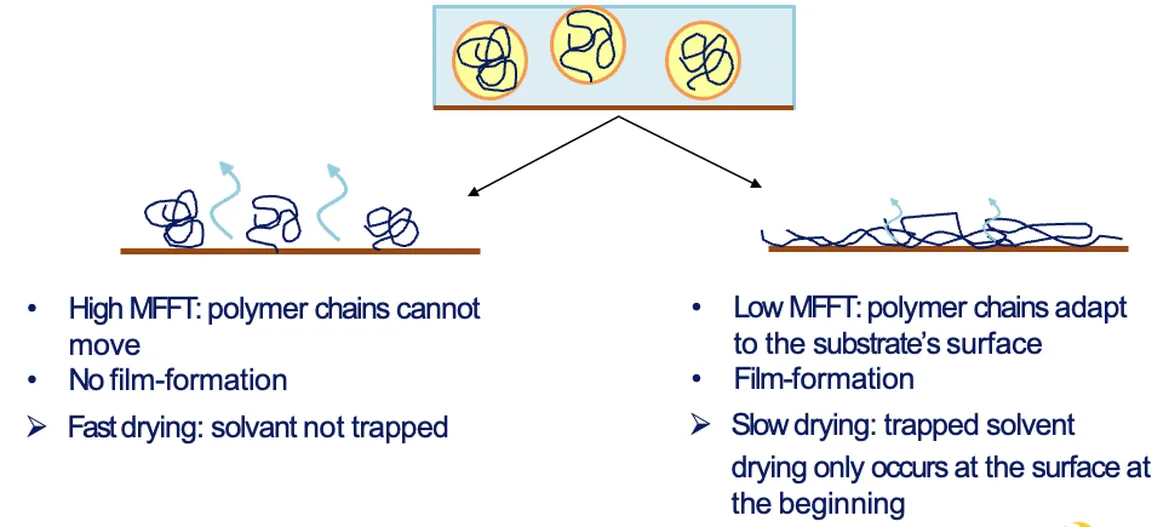
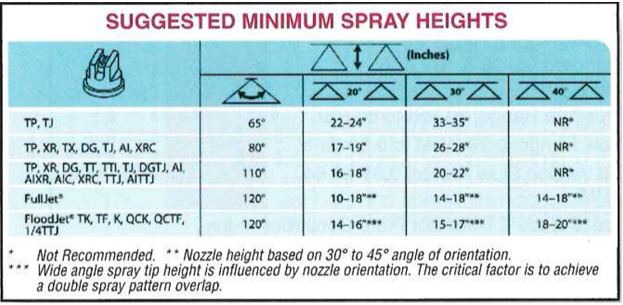
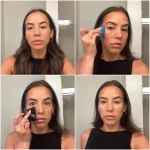
Image source: Bing (Web (fair-use with source credit))
How Rapid Evaporation Creates Uneven Binding Zones
Think of the polymer as glue. Glue needs time to set. If you pull the pieces apart while it’s still liquid, the bond fails.
Rapid evaporation pulls the "pieces" (makeup layers) apart physically. The skin contracts as it cools from the alcohol flash. This contraction breaks the fragile initial bond.
The polymer snaps in microscopic places. Loose powder falls into these cracks.
We observe this pattern most clearly around the nose and mouth. These areas move constantly. Facial expressions flex the skin.
A brittle, fast-dried film cannot handle this movement. It fractures. The fracture lines collect pigment.
Over hours, these lines become dark streaks. Streaks look like severe patchiness. To avoid this, reduce alcohol exposure.
Use a buffer layer like a lightweight moisturizer. Slow down the flash-off rate.
Decision Branch 2: Are You Fighting Hydrophobic Repulsion?
Oil and water don’t mix. This basic rule destroys many makeup routines. Many professional powders are coated in silicones or oils for slip.
These coatings make application easy. But they resist water. Standard setting sprays are water-based emulsions.
When water hits oil-coated powder, it beads up. It rolls off. It doesn’t penetrate the powder layer.
The spray never touches the actual pigment particles. It only touches the surface of the oil coating. The polymer forms a film on top of the oil.
But since the oil moves independently, the film slides. It bunches up in corners. It stretches thin in other areas.
Thin spots tear. Torn spots expose raw powder. Raw powder oxidizes faster.
Oxidized powder turns orange or gray. This discoloration reads as patchiness.
Oil-Based Powders Meets Water-Based Sprays: The Compatibility Crisis
Check your ingredient list. Look for dimethicone, cyclopentasiloxane, or mineral oil in your powder. If present, your powder is hydrophobic.
Using a simple water mist won’t work. You need an amphiphilic spray. These contain surfactants that bridge oil and water.
Surfactants lower surface tension. They allow the water to spread over the oil. Without surfactants, beading is inevitable.
Beading creates bald spots in your coverage.
Some brands formulate "fixing" sprays specifically for theatrical use. These often contain higher concentrations of binders. They are designed to grip slippery surfaces.
Drugstore mists rarely have this strength. They assume standard cosmetic bases. If you use heavy-duty stage powders, drugstore sprays fail.
The mismatch causes immediate separation. You’ll see clear zones where the spray didn’t adhere.
Checking Ingredient Lists for Silicone Barriers and Talc Conflicts
Talc is another common offender. Pure talc is oleophilic (oil-loving). It hates water.
If your spray has low solids content, it can’t overcome talc’s resistance. The water evaporates. The talc remains dry and loose.
It blows away easily. Transfer happens. Masks pick up white dust.
Pillows get stained. This loss of material creates thinner coverage over time. Thinner coverage looks patchy compared to untouched areas.
To test compatibility, try this method. Spray a small amount on your hand. Let it dry completely.
Rub a bit of your powder into it. Does it smear? Or does it ball up?
Balling indicates incompatibility. Smearing suggests good integration. Trust this tactile feedback.
It predicts facial performance accurately. Avoid mixing incompatible chemistries. Choose either all-water-based or all-silicone-based systems.
Consistency prevents conflict.
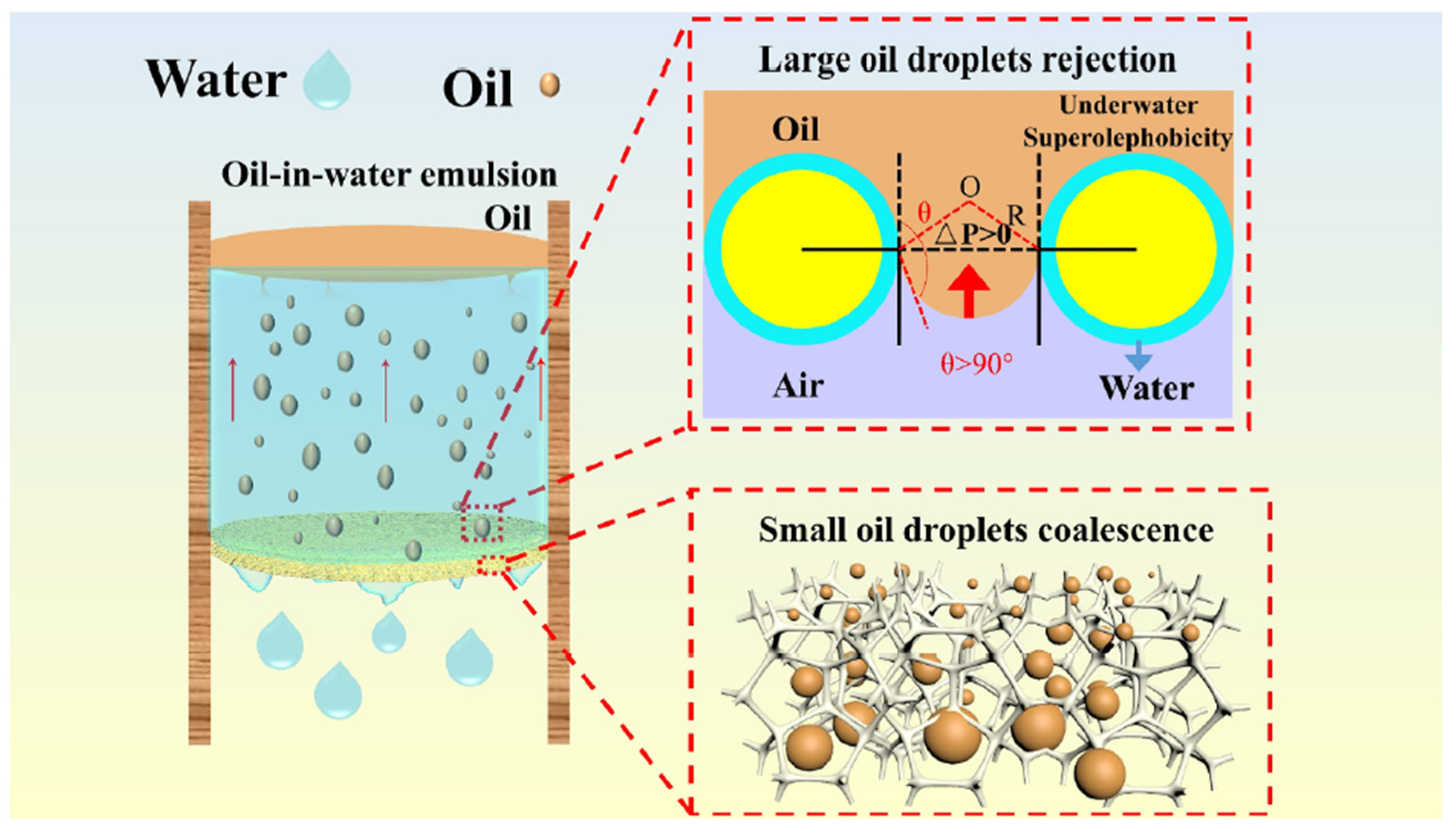
Image source: Web (Bing) / mdpi.com (Web image (fair-use with source credit))
Decision Branch 3: Is It Application Distance and Droplet Size?
Physics governs spray distribution. Nozzle design determines droplet mass. Heavy jets deliver large volumes of liquid in single bursts.
Fine mists deliver tiny, uniform spheres. Large droplets act like bombs. They crater into the powder.
They displace pigment outward. The center becomes saturated mush. The edges remain dry powder.
This radial difference creates a visible ring. Rings accumulate across the face. Accumulated rings equal patchiness.
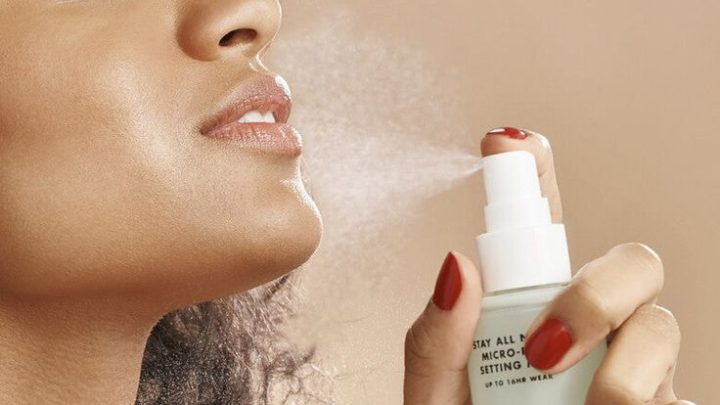
Distance matters equally. Holding the bottle six inches away spreads the cone widely. Ten inches disperses it further.
Two inches concentrates force. Most users hold it too close. They want precision.
Precision leads to saturation. Saturation leads to dissolution. Dissolved pigment re-dries as clumps.
Clumps reflect light differently. Light reflection highlights texture flaws. Texture flaws ruin the illusion of smooth skin.
The Physics of Fine Mist vs. Heavy Jet Nozzles
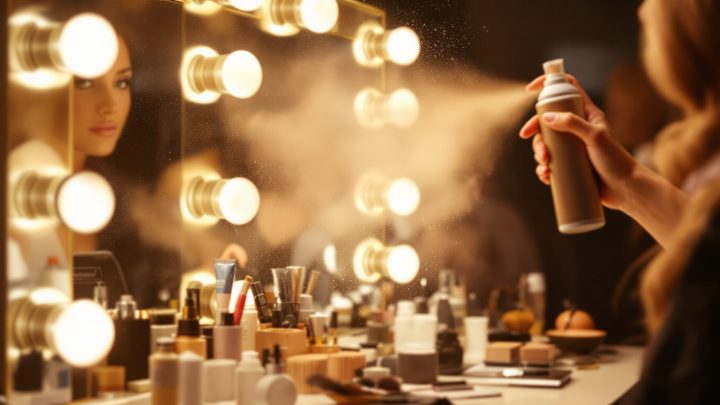
Professional aerosol cans use pressurized gas. This forces liquid through tiny apertures. The result is sub-50-micron droplets.
These droplets float gently. They settle evenly. Manual pump sprayers struggle here.
Pump pressure varies with each squeeze. One squeeze might release 0.1ml. Another releases 0.3ml.
Inconsistency breeds unpredictability. Unpredictable delivery means unpredictable results.
If you use a manual sprayer, prime it thoroughly. Test it on tissue first. Ensure the stream is consistent.
If you see drips, adjust the nozzle. Some nozzles twist to change aperture size. Open it wider for finer mist.
Closed tight for focused streams. Focus is dangerous for full-face application. Go wide.
Accept less intensity per spot. Gain uniformity overall. Uniformity beats intensity every time.
Correcting Wet Spots Before They Set into Patches
Caught a drip? Act fast. Do not rub.
Rubbing drags wet powder across dry areas. It smears the boundary. Blotting works better.
Use a clean, dry tissue. Gently press the wet spot. Absorb excess liquid.
Leave the polymer behind. Remove the solvent carrier. This reduces the depth of penetration.
Shallower penetration means smaller craters. Smaller craters mean smoother blends.
Wait thirty seconds after blotting. Check the texture. If it feels gritty, you removed too much binder.
Reapply lightly. If it feels sticky, you left too much solvent. Wait longer.
Patience saves your finish. Rushing fixes nothing. It worsens the error.
Treat wet spots like surgical wounds. Clean, careful, minimal intervention. Aggressive correction causes scarring.
Scarring in makeup looks like permanent patchiness.
The Fix-It Workflow: Step-by-Step Rescue Techniques
You’ve diagnosed the problem. Now solve it. Follow this sequence strictly.
Deviation risks recurrence. Start with skincare prep. Cleanse thoroughly.
Exfoliate gently twice weekly. Smooth skin accepts makeup better. Rough skin traps debris.
Debris creates bumps. Bumps cast shadows. Shadows mimic patchiness.
Eliminate the root cause first.
Next, choose your base. Match primer to foundation type. Silicone primer for silicone foundation.
Water-based for water-based. Never cross-contaminate layers. Apply foundation thinly.
Build coverage gradually. Thick layers take forever to dry. Forever equals shifting.
Shifting equals messing up. Keep it light. Keep it controlled.
Control prevents chaos.
The "Sandwich Method" Adjustment for Different Skin Types
The sandwich method involves powder, then spray, then powder again. It sounds counterintuitive. Adding powder to wet spray seems risky.
Done correctly, it seals everything. Here’s how. Apply your base foundation.
Dust lightly with translucent powder. This sets the shape. Now spray your setting mist.
Hold eight inches away. Mist evenly. Wait until tacky (not wet).
Tap off excess powder with a puff. Press gently. Do not swipe.
Swipe disturbs the wet film. Press embeds the second powder layer into the semi-dry polymer.
For oily skin, skip the second powder layer. The first powder plus spray suffices. Extra powder invites cakiness.
For dry skin, add a hydrating serum before foundation. Serum plumps cells. Plumped cells hold powder better.
Better retention means fewer gaps. Fewer gaps mean seamless finishes. Customize the sandwich to your biology.
One size does not fit all. Biology dictates success.
Patting vs. Rubbing: How to Blend Without Disrupting the Film
Tools matter. Brushes sweep. Sponges bounce.
Fingers press. Sweeping lifts dried flakes. Lifted flakes create holes.
Holes look like peeling paint. Peeling is ugly. Bouncing compacts loosely.
Compacted powder reflects light uniformly. Uniform reflection hides texture. Pressing anchors deeply.
Deep anchoring lasts longest. Longest lasting wins marathons.
Use a damp beauty sponge for pressing. Dampness activates residual tackiness. Activated tack grabs powder.
Grabbed powder stays put. Put powder doesn’t migrate. Migration causes fading.
Fading exposes skin tone variations. Variations read as patchiness. Stop migration.
Stop fading. Preserve integrity. Integrity preserves beauty.
Beauty relies on stability. Stability comes from correct tool usage. Choose bouncing or pressing.
Avoid sweeping entirely.
Common Mistakes That Guarantee Patchy Results
Over-saturation is the silent killer of smooth finishes. Many users mistake "dewy" for "wet." They spray until droplets run down their cheeks. This floods the polymer matrix.
The film becomes too thick to cure evenly. It stays tacky for minutes instead of seconds. During this window, every stray hair or dust particle sticks.
The result is a gritty, uneven texture that won’t blend away. Less liquid always yields better control.
Timing errors compound the damage. Applying powder immediately after spraying traps moisture beneath the dry layer. The water tries to escape through the powder.
It pushes particles upward. This creates tiny bumps across the forehead and chin. These bumps catch light.
They look like severe patchiness under direct sunlight. Always wait for the spray to reach a semi-dry state. Touch your cheek lightly.
If it feels cool and damp, stop. Wait another thirty seconds.
Over-Saturating the Skin Barrier
Skin health impacts makeup adherence directly. A compromised barrier leaks transepidermal water loss (TEWL). This internal moisture fights external hydration from sprays.
When barriers are damaged, products sit inconsistently. Some areas absorb quickly. Others repel liquid entirely.
This differential absorption creates map-like patterns on the face. Fix your skincare before blaming your setting spray. Use ceramides or niacinamide to repair integrity.
Healthy skin holds product uniformly. Unhealthy skin rejects it sporadically.
Aggregate reviews indicate that exfoliating too close to application worsens this. Freshly scrubbed skin has micro-abrasions. Liquids seep into these cuts.
Powders settle there. This causes localized darkening or clumping. Avoid harsh physical scrubs within 24 hours of heavy makeup use.
Stick to gentle enzymatic exfoliants if necessary. Smooth canvas equals smooth coverage. Rough terrain guarantees trouble.
Applying Powder Too Soon After Spraying (The Tacky Trap)
The "tacky trap" happens when you rush the drying phase. Polymers need time to cross-link. Cross-linking creates the durable mesh that locks pigment.
Interrupting this process leaves weak bonds. Weak bonds break under friction. You touch your face.
Makeup shifts. Shifted makeup looks blotchy. Patience is the cheapest tool in your kit.
Set a timer if needed. Two minutes is often sufficient for most formulas.
If you must speed things up, use a fan. Airflow accelerates solvent evaporation without heat damage. Heat expands pores.
Expanded pores leak oil. Oil breaks down powder. Cool air dries polymers efficiently.
Never use a hair dryer on hot settings. It melts silicone bases. Melted silicone separates from pigments.
Separation looks like curdling cheese on your skin. Curdled makeup cannot be saved with more powder. Prevention beats correction every single time.
FAQ: Quick Fixes for Persistent Texture Issues
Can I fix patchy makeup without removing it all?
Yes, but only if caught early. Use a clean, damp sponge to gently press the area. Do not wipe.
Wiping removes coverage. Pressing redistributes the binder. Follow with a light dusting of translucent powder.
Let it sit for one minute. Brush off excess carefully. This resets the surface tension.
It blends edges seamlessly. Severe caking requires removal. Minor patches respond well to pressing techniques.
Speed matters here. Act before the film fully hardens. Once hardened, it resists adjustment.
Hardened patches demand total redo. Know the difference between soft and set. Soft means movable.
Set means permanent.
Does humidity affect how setting spray performs?
Absolutely. High humidity slows solvent evaporation. Water-based mists stay wet longer in humid air.
This extends the tacky phase dangerously. Powder applied during this phase dissolves into mud. Mud dries into irregular crusts.
In tropical climates, switch to alcohol-based sprays. Alcohol flashes off regardless of ambient moisture. It ignores humidity.
Low humidity speeds up drying excessively. Skin may crack if spray contains high glycerin. Adjust formula based on season.
Summer demands fast-drying agents. Winter benefits from humectants. Match chemistry to climate.
Ignoring weather leads to predictable failures. Weather dictates performance variables. Respect the environment around your skin.
Why does my powder turn orange after spraying?
Oxidation triggers color shifts. Certain iron oxides in foundation react with oxygen. Spray introduces moisture.
Moisture accelerates oxidation rates. The reaction turns pigments darker or warmer. This effect is strongest on oily skin.
Sebum mixes with oxidized pigment. The mixture migrates into pores. Pores appear as dark dots.
Dark dots look like patchiness. Choose non-oxidizing foundations. Look for labels stating "stable color." Antioxidants like Vitamin E help slow reactions.
Apply primer to seal skin oils. Sealed oils reduce oxidation contact. Preventive steps save your shade match later.
Shade matching fails when oxidation wins. Control the chemical reaction first.
Is it better to spray before or after powder?
Both methods work for different goals. Spraying before powder sets the base layer. It prevents powder from sliding off oily zones.
This is ideal for combination skin. Spraying after powder locks everything in place. It creates a unified film over all layers.
This suits dry skin needing extra hold. Hybrid approaches exist. Light mist before powder.
Final mist after. This sandwich method maximizes longevity. Experiment to find your balance.
One size rarely fits all skin types. Test small areas first. Observe wear patterns over eight hours.
Data drives decisions. Guesswork leads to waste. Track results meticulously.
Refine technique iteratively. Precision yields perfection eventually.

Similar Posts