Best Makeup Mirrors for Small Spaces: A Buyer’s Guide
Figuring out how to choose a makeup mirror for small spaces starts with measuring, not shopping. Most buyers ignore their vanity depth until the new unit blocks their elbows or won't fit on the counter. You need to know exactly how much room you have before looking at specs.
Our research shows that standard vanities are often just 18 inches deep. As of 2026, manufacturers design slim-profile mirrors specifically for this constraint. We’ll walk through the critical decision points so you pick a mirror that actually works in your tight quarters.
Image source: Web (Bing) / walmart.com (Web image (fair-use with source credit))
Quick Answer
To choose a makeup mirror for small spaces, first measure your available depth. Select a wall-mounted or clamp-on model if counter space is limited under 18 inches. Prioritize a Color Rendering Index (CRI) above 90 for accurate color matching.
Choose 3x to 5x magnification for daily use. Ensure the power source matches your outlet access. Avoid bulky bases that consume valuable surface area.
Start With Your Constraints: Depth, Power, and Rental Rules
Before browsing styles, define your three hard limits. These factors eliminate most bad choices immediately. Ignore them, and you’ll end up with expensive clutter.
First, measure your protrusion limit. How far can the mirror stick out from the wall? If your sink is 18 inches deep, a mirror base wider than 4 inches will block your workflow.
Look for profiles under 3 inches for true efficiency.
Next, assess your power reality. Do you have an outlet within arm’s reach? Many small bathrooms lack accessible plugs near the vanity.
If you don’t, you must choose between battery-operated units or USB-C models that draw power from existing lamps. Hardwiring is rarely feasible in rentals.
Finally, check installation permissions. Are you renting? If so, drilling into tile or drywall is likely prohibited.
This makes non-permanent solutions like adhesive strips, suction cups, or clamps mandatory filters. Don’t assume you can modify the walls without risking your deposit.
Choose Your Mounting Strategy Based on Space Type
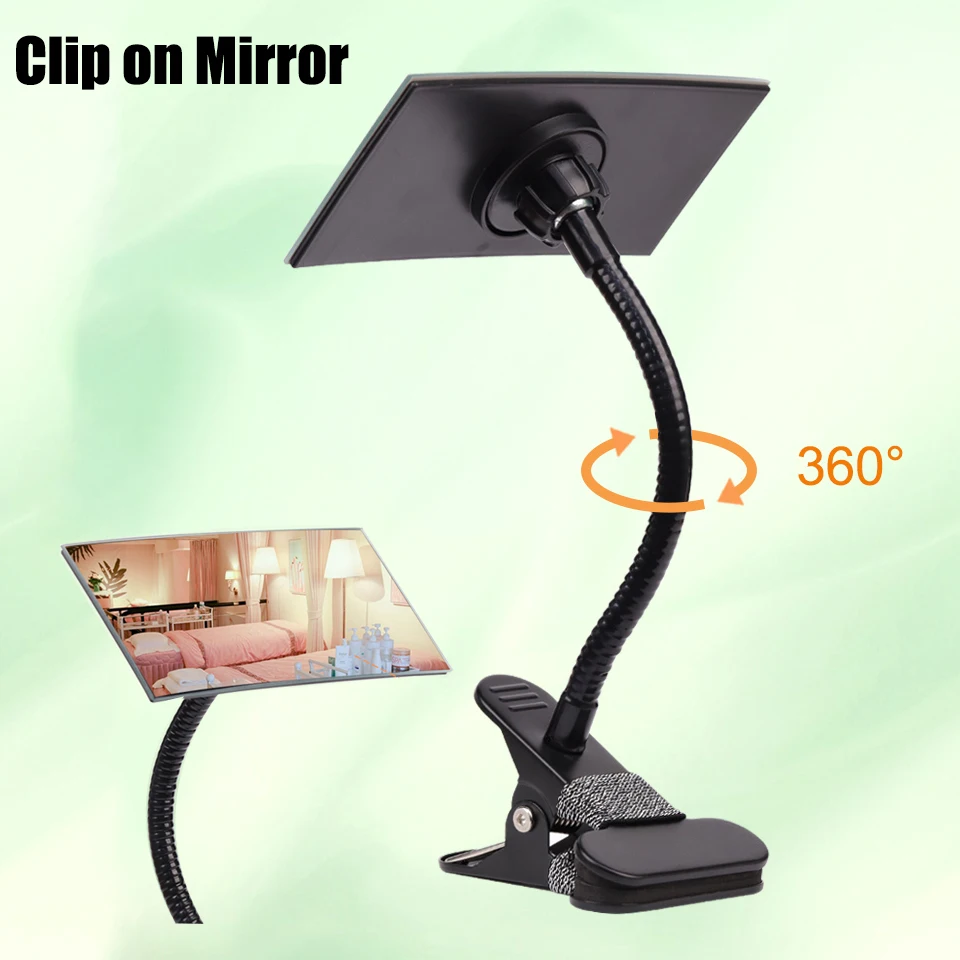
Image source: Web (Bing) / aliexpress.com (Web image (fair-use with source credit))
Once constraints are set, pick the mounting method that solves your specific spatial problem. This is the primary branch of our decision tree. Each option trades stability for flexibility or vice versa.
Wall-Mounted: The Vertical Savior
This is best for tiny vanities with zero usable counter space. It frees up 100% of horizontal surface for your skincare bottles and tools. The downside is permanence.
You usually need to drill holes, which isn’t ideal for renters.
Look for pivoting arms when selecting this type. A fixed mirror forces you to move your body to find the right angle. A pivoting mirror moves to meet you.
Seek at least 45 degrees of vertical tilt to accommodate different seating heights. This feature is crucial if multiple people share the bathroom.
Countertop/Freestanding: The Flexible Compromise
Choose this for shared spaces, dorms, or strict no-drill policies. It offers portability and requires no installation damage. However, it eats up precious counter real estate.
In a small space, every square inch counts.
Stability is your main concern here. Heavy bases prevent tipping but take up more room. Wide feet offer better balance than narrow stands.
Avoid tall, slender designs that wobble when you apply eyeliner. Aggregate reviews report that weighted bottoms are essential for safety in busy households.
Clamp-On/Edge-Mount: The Hidden Gem
These utilize dead space along desk edges or thick countertops. They leave the main surface completely clear. This is excellent for studio apartments where desks double as vanity stations.
Check the maximum clamp width before buying. Most units fit edges up to 2 inches thick. Verify your furniture’s thickness.
Also, look for soft rubber pads on the jaws. These protect your surfaces from scratches. Gooseneck adjustability is key here.
It offers the most freedom but must lock securely. Loose necks sag under the weight of LED lights.
Match Magnification to Your Routine, Not Just Preference
Many buyers default to 10x because they think "more zoom is better." That’s a mistake. High magnification narrows your field of view. You lose sight of your whole face while focusing on one spot.
| Magnification | Best For | Field of View | Small Space Impact |
|---|---|---|---|
| 1x (Standard) | Full-face application, contouring. | Wide | Low glare risk; feels natural. |
| 3x – 5x | Foundation blending, brows, mascara. | Medium | Sweet spot. Detail without distortion. |
| 7x – 10x | Tweezing, extractions, precise liner. | Narrow | Risky. Can cause dizziness; needs steady hands. |
If you do full makeup daily, get a dual-sided mirror. One side should be 1x for overall checks. The other should be 5x for details.
This covers all bases without needing two separate units.
For quick touch-ups, stick to 3x. It’s forgiving. It shows enough detail to fix smudges without creating tunnel vision.
Users with vision impairments should prioritize 5x to 7x. Combine this with high-brightness LEDs to compensate for lower contrast sensitivity. Avoid 10x unless you’re doing very specific tasks like plucking eyebrows.
Lighting Quality: CRI and Color Temperature Are Non-Negotiable
In small spaces, ambient light is often poor. Bathroom bulbs tend to be yellowish or dim. Your mirror’s job is to provide neutral, accurate task lighting.
Bad lighting leads to foundation mismatches and harsh eyeshadow lines.
The Two Metrics That Matter
First, check the Color Rendering Index (CRI). Aim for 90+. Below 80, colors look washed out or artificially orange.
A CRI of 95+ ensures what you see matches daylight. Manufacturer specifications indicate that professional-grade mirrors now commonly hit 95+.
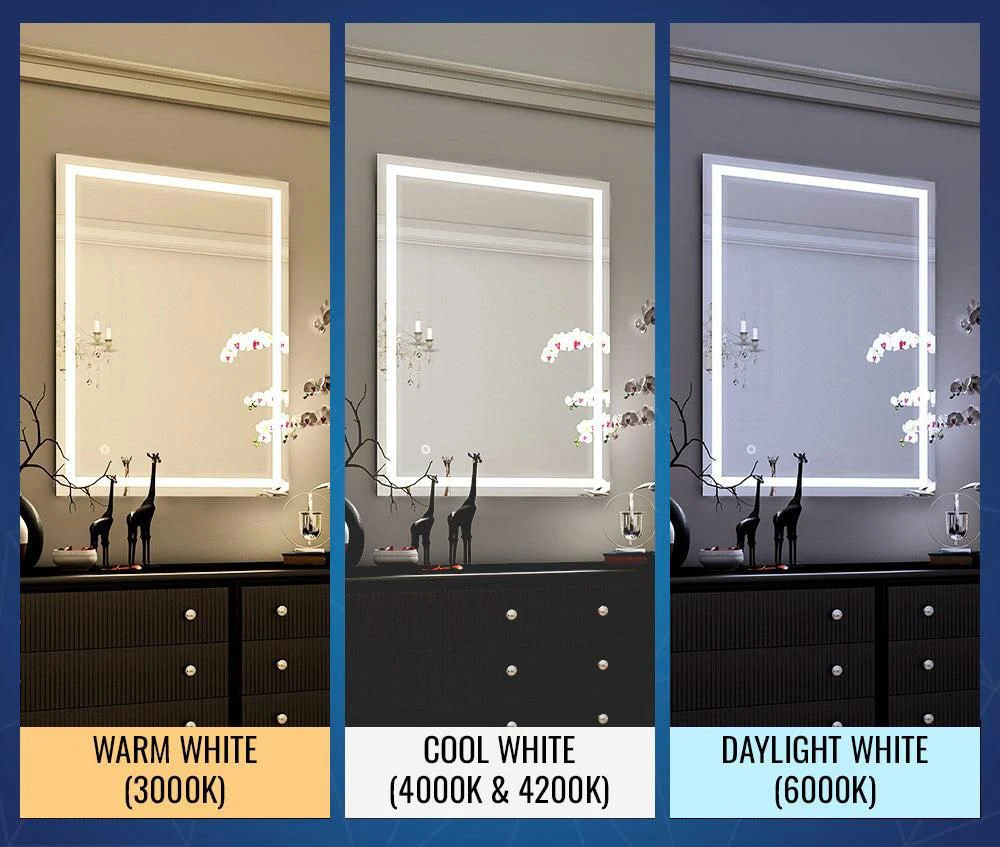
Second, evaluate Color Temperature (Kelvin). Target 4000K to 4500K. This is Neutral White.
It mimics natural window light. Warm light (2700K) hides redness and texture. It’s flattering but inaccurate for precision work.
Cool light (5000K+) highlights every pore. It can feel clinical and overly harsh for daily use.
Adjustable color temperature is a premium feature worth considering. Switching from 3000K to 5000K lets you test your makeup in different environments. Per Illuminating Engineering Society guidelines, task lighting should minimize glare while maximizing visibility.
Look for diffusers on the LED panels to achieve this.
Battery vs. Plug-In: The Convenience Trade-Off
Small spaces often lack convenient outlets. This forces a choice between power reliability and placement freedom. There is no perfect answer, only trade-offs.
Rechargeable Lithium-Ion via USB-C is the modern standard. It charges quickly and lasts 20 to 50 hours depending on brightness. Brightness remains consistent until depletion.
This is ideal for portability. You can move the mirror from bedroom to bathroom easily.
Replaceable batteries (AA/AAA) are cheap upfront. But they are annoying long-term. Brightness dims gradually as cells die.
Only choose this if you rarely use the mirror. Or if you need emergency backup power. Verified buyer feedback reports frequent complaints about inconsistent light levels with alkaline batteries.
Plug-In AC adapters are always ready. No charging anxiety. But you’re tethered to an outlet.
In tiny bathrooms, finding an outlet near the vanity is rare. Check your GFCI outlet location first. If it’s across the room, the cord might be too short.
For most users, USB-C rechargeable wins. It balances mobility with performance. Ensure the cable length allows full pivoting without pulling taut.
Common Mistakes That Waste Money and Space
Avoid these traps that plague first-time buyers in compact setups. They seem minor until they render the mirror useless.
Ignoring depth clearance is the top error. Many shoppers measure their counter but forget the mirror’s open width. A tri-fold unit might look slim closed.
But when unfolded, it could extend six inches forward. If your vanity is only four inches deep from the wall to the sink edge, this creates a collision. Always check the manufacturer’s specs for "open dimensions," not just folded ones.
Overlooking anti-fog coatings causes daily frustration. If your mirror sits near a shower or bathtub, steam will obscure your reflection instantly. Standard glass fogs within seconds of hot water running.
This forces you to wipe the surface repeatedly during your routine. Look for hydrophobic coatings or heated defogger pads. These are rare in budget models but essential for humid bathrooms.
Aggregate reviews indicate that uncoated mirrors become impractical in enclosed spaces without ventilation.
Chasing smart features adds unnecessary bulk and cost. Bluetooth speakers or app connectivity often mean thicker frames. In a small space, every millimeter counts.
These gadgets introduce failure points too. Electronics degrade faster in damp environments. Focus strictly on optical quality and lighting accuracy instead.
Simplicity wins when real estate is scarce.
Finally, forgetting glare control hurts your eyes. Glossy white tiles reflect LED light back into your face. This creates harsh shadows and eye strain.
Seek mirrors with matte diffusers on the light panels. These spread illumination evenly rather than blasting direct beams. Testing the mirror under your actual bathroom lighting helps identify this issue before purchase.
Quick Decision Guide: Which Mirror Fits Your Scenario?
Use this cheat sheet to finalize your choice based on your primary constraint. It maps specific problems to recommended solutions.
| Your Primary Constraint | Recommended Type | Key Specs to Filter By |
|---|---|---|
| Zero Counter Space | Wall-Mounted Pivot | Slim profile (<2"), 3x/5x dual-side, CRI >90 |
| Renter / No Drilling | Clamp-On or Adhesive | Strong grip mechanism, lightweight frame, USB-C power |
| Shared Bathroom | Tri-Fold Tabletop | Compact fold-flat design, individual light controls, stable base |
| Poor Ambient Light | High-Brightness LED | Adjustable Kelvin (3000K-5000K), dimmable, large surface area |
| Vision Impairment | High-Magnification Standalone | 7x-10x, ultra-bright LEDs, large handle for grip, anti-shake base |
If you have zero counter space, go wall-mounted. Ensure it pivots. Fixed units force awkward body positioning.
For renters, avoid drilling at all costs. Clamps on desk edges or heavy-duty adhesive strips work best. Check weight limits carefully.
Most adhesives hold up to five pounds. Anything heavier risks falling.
For shared bathrooms, portability matters. A tri-fold tabletop mirror folds flat for storage. It doesn’t monopolize the vanity when others need to brush teeth.
High-brightness LEDs are critical if your room lacks windows. Look for adjustable color temperatures to mimic daylight. Vision-impaired users benefit from standalone high-mag units.
Pair them with bright lights to enhance contrast. Stability is non-negotiable here. Wide bases prevent tipping during detailed work.
Frequently Asked Questions
Can I use a regular bathroom mirror instead?
No. Regular mirrors lack magnification and controlled lighting. They don’t solve shadow face caused by overhead ceiling lights.
Dedicated makeup mirrors provide frontal, shadow-free illumination. This precision is essential for even foundation application and eyeliner symmetry.
Are adhesive mounts safe for heavy mirrors?
Only if the manufacturer specifies the weight limit. Most command strips hold two to five pounds. Heavier metal-framed mirrors will fall.
For anything over three pounds, prefer clamp-ons or drilled wall mounts. Clean surfaces with alcohol before applying adhesives to ensure proper bonding.
Do I really need 10x magnification?
Rarely. Ten-times zoom creates tunnel vision that makes blending difficult. Unless plucking eyebrows or doing intricate lash work, three to five times is sufficient.
Save ten-times for specialized tasks only. Daily routines rely more on accurate color than extreme detail.
How do I prevent my mirror from fogging up after a shower?
Wipe it down with a microfiber cloth immediately after use. For persistent issues, choose a model with a built-in electric defogger pad. Aftermarket anti-fog sprays also help temporarily.
Running an exhaust fan significantly reduces humidity levels in the room.

Similar Posts